
by Ali Hammad
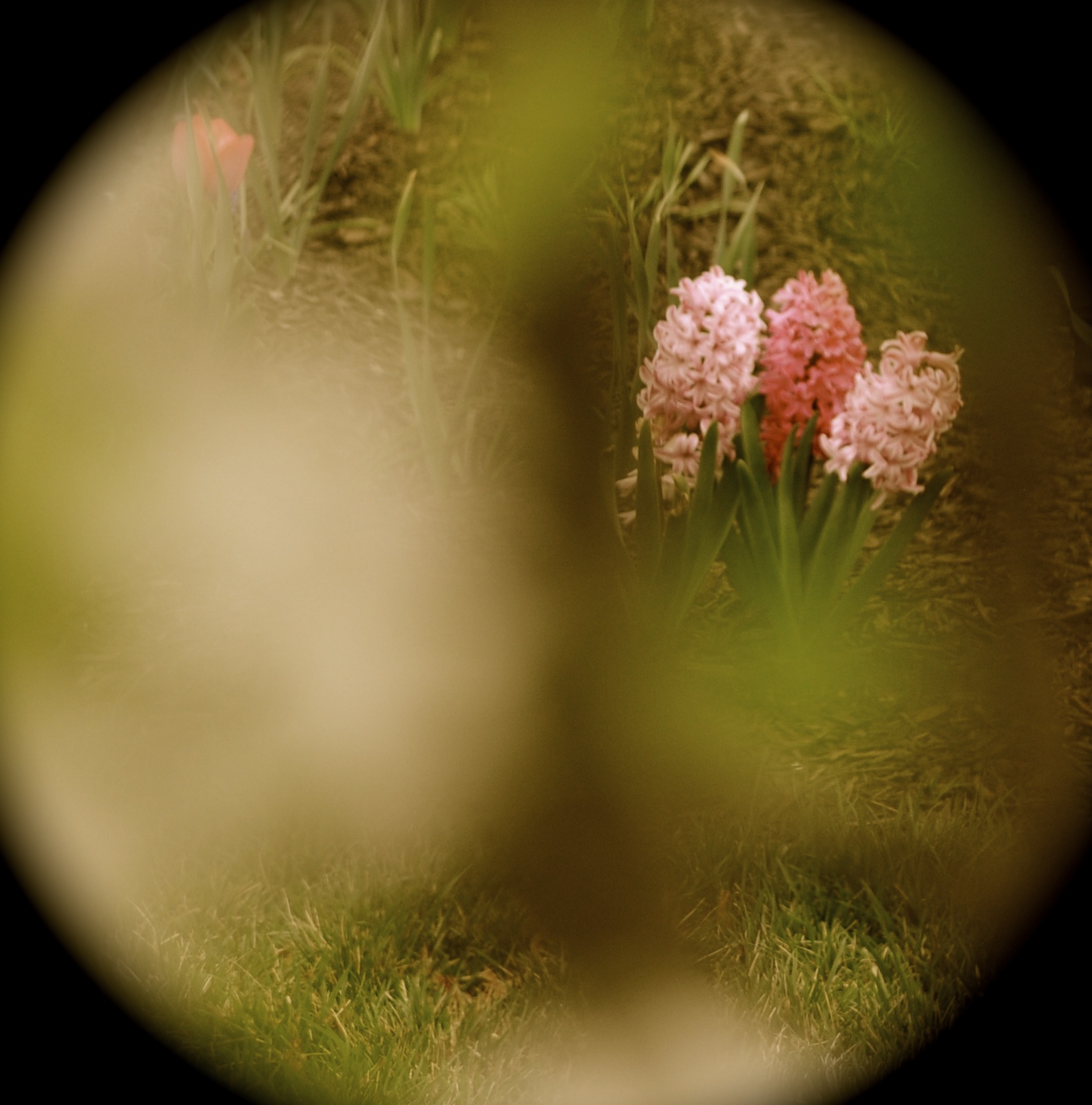
Beauty is not always on the surface or in the center.
Photo and message by Ali Hammad
by Ali Hammad
Beauty is not always on the surface or in the center.
Photo and message by Ali Hammad
“It is not easy to find happiness in ourselves, and it is not possible to find it elsewhere.” …. Agnes Repplier (American essayist)
Contributed by Kamran Zafar
by Navid Zaidi
کوڈی دمڑی پلے نہ کائی
پار ونجن نوں میں سدھرائی
نال ملاحاں دے نہیں اشنائی
جھیڑاں کراں وللیاں
تانگھ ماہی دی جلی آں
I have no hard cash on me, I am penniless
Still I am eager to get across the waters
I have no acquaintance with the boatmen
I pick up a quarrel with them foolishly
I am consumed by the longing for my Beloved …….Bulleh Shah
Sometimes we pick up fights needlessly with our superiors, employers, friends, spouses, children, and parents without thinking that we depend on them in many ways. We wish to get somewhere in life and be successful but don’t realize that we live in a complex and interconnected world where we need the help of so many people around us even to accomplish small tasks. They are the boatmen in our lives that ferry us across the waters in the journey of life. We should make a sincere effort to get to know all of these boatmen, make a connection and try to get along without losing ourselves.
Boatmen come in many forms in our lives. If they are sincere people and we keep taking them for granted, we may eventually burn the bridges because of our wrong attitude. We need to keep our ego in check, which is the main obstacle in our understanding of the boatmen.
by Kamran Zafar
He always felt in his heart that love had no color, language, religion, boundary, or barrier. And even deeper in his heart he knew that the purpose of life was a life of purpose. Yes, he thought, to find that purpose was every individual’s responsibility, because it might differ from individual to individual. For himself, he found that a love of humanity was the best purpose to have in life.
And, like love, humanity in his mind was above color, language, religion, boundary or barrier. He had, in the past, struggled with his own identity, but over time had become happy with just being called a “Human.” Humanism he found to be universal, and being universal made him content, and thus was that he found the rare bliss of contentment.
He also believed in the power of free thinking, so strongly that he thought that set humans apart from other creations. His philosophy of life was “Question Everything,” and question oneself the most: questions like “Is Reality real?” and “Why white is not black?” and so on. He was never a fan of stereotypes, be they in any form or shape. He knew that his favorite Sufi poet, Bulleh Shah, already knew the answer to the question that he posed in the line “Bullah Ki Jaana Mein Kaun” — Bullah How Do I Know Who I Am? That was why when he himself was visiting his native country for the first time in a decade, he knew exactly who he was. Being a minority himself in a distant land he now called home had taught him to empathize with minorities. He knew, too, that humans sometimes had a strange perception of things, and that the same thing may be perceived differently by two individuals: one’s 9 might be another’s 6 , one person’s gain might be another’s loss, one’s victory another’s defeat. To him, right or wrong were only relative terms.
He had not planned this, but during his visit he found himself in his native village on a Christmas eve. He decided to share his love of humanity with the local Christian community, a minority in that area. He asked his older brother (a village alderman), his nephew, and his sons to accompany him. In doing so, he was crossing some religious, cultural and traditional boundaries, but his experience in that church that night proved rewarding.
No sooner had they entered the church that the power went off, not unusual for that part of the world. He considered that a sign — “sometimes you may have to close your eyes to see the light” — that he did not need electric power for light after all. The priest reaffirmed his thought by saying that the light for the church was God.
He felt he was at the right place at the right time. The entire time he was in that church, he found himself at absolute peace and tranquility. Love indeed had no color, language, religion, or boundary, and humanism was universal. When church attendees were singing to celebrate Jesus’ birth, among their voices he found his own voice. Again he found himself to be a ‘human’ above all else. Time stood still. He felt himself to be a part of that church and wanted to stay in that state of bliss for eternity. In the local tradition of celebration, when he was distributing sweets to the children at the church, he wished he could do that for ever.
When he was leaving that church, his heart was filled with joy. He was reminded of the Sufi message of love, where humanity prevails and no boundaries exist.
by Navid Zaidi
The phenomenon of Sufism and the spiritual life in Islam is such a broad topic that nobody can venture to describe it fully.
Each of the blind men in Rumi’s famous story, when asked to touch an elephant, described it according to the part of elephant’s body his hands had touched: to one the elephant appeared like a throne, to another like a fan, to another like a water pipe, and to yet another like a pillar. But no one was able to imagine what the whole elephant would look like. Such is the case with Sufism, the generally accepted name for Islamic mysticism.
To approach its meaning we have to ask first what ‘mysticism’ means. Mysticism contains something mysterious, not to be reached by ordinary means or by intellectual effort. The root common to the words ‘mystic’ and ‘mystery’ is the Greek myein meaning ‘to close the eyes.’
Mysticism has been called ‘the great spiritual current which flows through all religions.’ In its widest sense it may be defined as the consciousness of the One Reality; we can call it Wisdom, Light, Love, or Nothing.
What does the term Sufi mean? The generally accepted view is that the word is derived from the Arabic word ‘suf’ which means ‘wool.’ The Sufi mystics used to wear a coarse cloak woven out of wool hence they were called Sufis. Another explanation is that it comes from the term ashaab e suffa or ‘the people of the bench:’ the Companions of the Prophet of Islam who were poor and used to gather around the Prophet’s Mosque in Medina. Another source is the word ‘safa’ which means ‘to cleanse (the soul).’ Lastly, some believe it is derived from the Greek sophia (wisdom).
The basic tenet of Sufi philosophy is the realization of God through mystic experience in which senses and intellect, in the physiological sense, hardly play any part. Consequently, the emphasis of Sufism is on experience rather than theory. Through the spiritual experience the Sufi eliminates the sense of ego that is the major stumbling block in God-realization.
Sufis are opposed to the dogma of religion, so the term Sufi has also come to be used for freethinkers. They see God pervading everywhere and in all beings. So they have also been called pantheists. They see the One, all-pervading, everlasting Reality hidden behind the ever-changing appearance of this world. Man can achieve this transcendental state beyond time and space through mystic realization.
Multiple aims of Sufism are to raise man from the gross to subtle, from many to One, from change to permanence, from partial to complete and from ever-recurring suffering to never-ending bliss.
A major principle of spirituality is that the mind and the senses are only instruments of the soul. Although the soul is activated in this world through these instruments, yet it is quite apart and independent of them. The existence of the soul is neither dependent on body, mind and senses, nor can its original nature be changed by them. The soul possesses all the attributes of God. By association with mind and matter all of its native qualities have been suppressed. By removing the curtains of mind and matter the soul can regain its lost splendor. All its divine qualities can once again come to surface.
The Sufis remind the soul of its divine origin. By descending to the gross material world and by association with body, mind, and senses it has been deluded into believing that it is itself material, nothing more than the physical body, mind, and senses. The Sufis remind the soul that it is eternal, immortal, self-luminous and as blissful as God Himself.
The Sufis exhort the soul to leave the company of body, mind and senses and recognize its primeval form. Says Bulleh Shah:
Oh Bullah, take care and recognize yourself,
You are immortal; why do you cling to the body?
You are everlasting bliss,
You are resplendent light,
You are the form of bliss and unceasing consciousness.
All distinctions among human beings are based on contingent qualities that are not essential or necessary. The religion to which one belongs, the parents one is born to, the place of one’s birth could all have been different. So they cannot constitute the essence of man. So what really is man? Answers Bulleh Shah:
I take myself to be the First and the Last
I do not recognize aught except the One.
The reality of man is that which has neither beginning nor end. It is timeless and this entity is the soul. It can be neither body, nor mind, nor senses. And the essence of the soul is the same as God. So the reality of man is divine. He is God in essence.
No doubt the soul comes to the physical world in the garb of a human being. It comes from high spiritual regions and from the Ultimate Reality. It has the capacity to rise to those heights from which it has descended, and regain its lost freedom.
To attain this high position one should concentrate on meditation of the Lord. The human body is an exclusive center of experience and it is incumbent upon us to make full use of this gift.

by Modaser Shah
A big subject, indeed. I have been thinking about writing a post on it for some time but have been shrinking from it, looking for some inspiration in books and our local small Sufi group discussions. When I heard about a recent visit by one of our members, Kamran, to an impoverished church in rural Pakistan on Christmas, I felt truly moved. Kamran is an exceptional Sufi; unlike me, and many other aspirants, he is more a man of action than of theorizing and generalizing. He shows rather than tells, and this brings us to one thing that the mystic traditions share with Wittgenstein, i.e., some things can not be captured in language, and yet they are vital and some way has to be found of passing them on. And so it is that Lao Tzu, Zen masters like Dogen and Hakuin, Sufis like Rumi and Kabir, and Wittgenstein, relied on language to try to communicate or show what can’t be encompassed by language. Readers may be be familiar with Wittgenstein’s statement in the Tractatus: Whereof one cannot speak, thereof one must remain silent. Or Lao Tzu’s saying that the Way that can be named or talked about is not the Way. Chuan-Tzu is quoted as saying: If the Way is made clear, it is no longer the Way (Sufism and Taoism by Toshihiko Izutsu,1983, University of California Press). He talks about it as “a shapeless Shape, an imageless Image…” and a Nothing (wu in Chinese or mu in Japanese, an important term in the discourse of Zen).
Many will be skeptical about the idea that Sufism—rooted in Islam—can have anything in common with Zen and Taoism. However, first of all history does give us some clues about the interaction and mutual influencing between Islam and the brand of Buddhism which was prevalent in Gandhara (cf. modern day Kandahar, and the surrounding areas of northern Afghanistan and northwestern Pakistan) at the time of Islamic expansion into the region. This was the school that later on developed into the Zen tradition as it spread to China, Korea and Japan. Although the ruling and conquering classes were mainly interested in dominating the vanquished lands and marginalizing, if not wiping out, the local traditions and spirituality (and so the violent aspects of the interaction are well known) it may be hard to believe that there were elements in the Muslim polity who had curiosity about these “foreign” ways and were even ready to learn from them. For example, see Hindu & Muslim Mysticism by R.C. Zaehner. Bayazid Bistami is an example of this, discussed in detail in the book. He apparently had a teacher from India who taught him about meditation and such, and Bastami in turn taught his teacher about the Muslim way of praying. In those heady days of expansion and triumphs, it would have been difficult for the majority of the Muslims, armed as they thought they were with God’s final revelation and definitive answers to all life’s quandaries, to develop some curiosity and a willingness to learn from the subject and conquered peoples. The exception here, as in so many other areas, were some of the Sufi masters. Indeed, the humility and willingness to learn from others and from experience, and not to feel bound by preexisting notions, words, and concepts, can be said to be quintessential to the Sufi and Zen frame of mind.
Learning is not as simple a thing as it may seem on a superficial level; it seems to require a learning to learn, in such a way that the essential is not lost sight of in favor of beliefs and concepts, which have often to be unlearned to prepare the way for encountering emptiness in Zen and Reality in Sufism. This learning is not based on learning a new system of concepts or beliefs to replace previous ones, rather on guided practice and direct experience. The theoretical stuff—of which there is plenty, as one can imagine—is to be used as a means to show, as Wittgenstein indicates. The Buddha shows the way. He is quoted as saying that the Dharma was like a life raft, once one got to the other shore, it is to be discarded. Imagine that: teachings are dispensable.
Lacan, if I have understood the parts of his thinking as interpreted by Slavoj Zizek (in Less Than Nothing, for example), believed that human beings are constituted by absence or a lack, a void or emptiness. Consciousness without content is empty, or an emptiness always grasping on to something or the other, to be about or to be filled with something. Emptiness or void is hard to achieve or tolerate.
Zen is a form of meditation (We will leave aside the Rinzai sect which works with koans of one sort or another.) “which can be practiced by people of any or no religion.” In Zen for Christians by Kim Boykin, she says: Zen is a way of directly experiencing “no-self”—realizing that the distinction between “me” and “not-me” isn’t so clear and definite as we usually assume it is and experiencing the interconnection and interdependence of all things.”
One way to simplify an extremely complex situation is to say that both Zen or Sufism (or Taoism) is to surrender to what is: “Thy will be done on earth as it is in heaven.”
by Ali Hammad

Shipless a sea
Gravid a zephyr
A road at its tail
Or maybe the mouth
You on your
Red Adirondack
Dozing away
The rising day
Your breath deep
And ponderous
Pulling me in
Ship unwitting
Vortex unseen
Photograph and Poem by Ali Hammad
A View Counter to the Sufi Philosophy of Cosmic Absorption (Fana Fillah) in Dr Allama Iqbal’s poem ‘Secrets of the Self’ (Asrar-e-Khudi)
by Navid Zaidi
Napoleon said, ‘ I am a thing, not a person. ‘
So, what am I? A thing, or a person?
What do I find when I fix my gaze on my own conscious experience?
I pass from state to state. I am happy, sad, angry, loving and hating. I have wills, desires, emotions, aims and resolutions. I am judging, willing, and perceiving. Sensations, feelings and ideas, such is my existence.
You cannot perceive me as a thing in space. In reality, I am a self-contained exclusive center of experience. I know my reality in my acts of perceiving, judging, and willing. You must interpret, understand and appreciate me in my judgments, in my will-attitudes, aims and aspirations.
I am a Person. My personality is individual, unique and private. My pleasures, pains and desires are exclusively mine. My feelings, hates and loves, judgments and resolutions are mine alone.
Life is the fundamental fact of universe. It is a forward assimilative movement. The essence of Life is continual creation of desires and ideals. In man, the center of Life becomes a Person. For the purpose of preservation and expansion, Life has invented or developed out of itself certain instruments such as senses and intellect, which help it to assimilate.
All Life is individual and God Himself is an individual. He is the most unique individual. The universe is an association of individuals. However, this association is not complete in itself. It is the result of a conscious effort. We are gradually moving from chaos to cosmos and are helpers in this achievement. Thus the universe is not a finished act; it is still in the course of formation. There can be no complete truth about the universe, for the universe has not yet become ‘whole’. The process of creation is still going on and man too takes his share in it. He helps bring order into at least a portion of the chaos.
Obviously, this view of man and the universe is opposed to that of Sufism and Buddhism which regard absorption (fana fillah ) in a universal life or soul as the final aim and salvation of man.
The ideal of man is not self-negation but self-affirmation and he attains to this ideal by becoming more and more individual, more and more unique. Thus man becomes unique by becoming more and more like the most unique individual.
Physically as well as spiritually man is a self-contained center but he is not yet a complete individual. The greater his distance from God, the less his individuality. He who comes nearest to God is the completest person. Not that he/she is finally absorbed in God. On the contrary, he/she absorbs God into him/herself.
The personality attains to freedom by the removal of all obstructions in its way by mastering Nature. In other words, personality is an endeavor for freedom.
CONTINUATION OF PERSONALITY
Personality is a state of tension and can continue only if that state of tension is maintained. If the state of tension is not maintained, relaxation will ensue. Since personality, or the state of tension, is the most valuable achievement of man, he should see that he does not revert to a state of relaxation. How do we do that? By cultivating Love.
EDUCATION OF PERSONALITY
Personality is fortified by Love (Ishq). Although the word ‘Love’ is used in a very wide sense, it means the desire to assimilate, to absorb. The highest form of Love is the creation of values and ideals and the effort to achieve them.
As Love fortifies the personality, ‘Asking’ (Sawaal) weakens it. All that is achieved without personal effort comes under ‘Asking’. The son of a rich man who inherits his father’s wealth is an ‘asker’ (beggar); so is every one who thinks the thought of others.
Thus, in order to fortify our personality we should cultivate Love i.e. the power of assimilative action, and avoid all forms of ‘asking’ i.e inaction.
by Ali Hammad

The wind was picking up when I left office. By the time I got home, it was turning into a gale. The wind in Kansas is always strong. Sometimes I have thought of hitching a ride on a tornado to the Land of Oz, but on the stated day I just wanted to get home.
I pulled my car up the driveway, and parked it before the front door. The door was wide open. I was a little concerned at seeing that. I tried to hurry in, but rammed my body into an invisible barrier at the doorsill, as if the door was shut despite being open.
I stroked my forehead where I had bumped it, and looked in. Past the short corridor, a French door led to my fenced backyard. I’m not really the narcissist that some people accuse me of being, but can one be allowed to delight in one’s creations? And there was one creation right there in front of my eyes: my backyard.
Late spring had been kind to a place that had been laid out well. The Bradford pears and the red maples were almost fully foliated. Douglas firs and blue Atlas cedars, planted in a scattered manner to give the impression of random growth, were resplendent. The acacia and the willows were random without design, and majestic. The French door from the house led to a stamped-concrete patio that was highlighted by fiery red azalea bushes. A couple of steps down from the patio, the centerpiece of the yard was my sixty-foot, sky-azure pool. (Note: twice the length of an average American pool.) To the west of the pool was a shaded and screened verandah surrounded by armies of foxglove and blue hydrangea, a counterpoint to the azalea of the patio. East of the pool, the pool house was covered by nurtured ivy climbing its walls. All corners of the pool deck were adorned by gigantic urns sprouting daffodils. Not quite Lake District, then, but a Wordsworth-inspiring vista, nevertheless, I would have ventured to say.
The whole backyard was still, and shimmered in bright sunlight.
“Wait a second!” I thought, “A sunny and still yard?”
I looked back. Behind me, the sky was overcast by a dense nimbus. The wind was gathering ever more power, and the tops of trees were bending in obeisance.
I looked again at the backyard: sunny and serene. I pressed my right ear against the invisible barrier. I could hear faint music wafting in from the yard. Something exotic. Like a lyre, maybe. Not that I know what a lyre sounds like, but the word goes well with exotic. And I could hear a faint murmuring—some clinking of glass, too—like a party was in progress, albeit an invisible one because no guests were to be seen.
“Is anyone in there?” I shouted.
“Present your credentials,” said a voice.
“What?” I asked.
“Like I said, present your credentials.”
“I don’t need any credentials to enter my own house, and how dare you use some device to prevent me from entering through my own front door.”
“This is not your house. Back there is Heaven and you are standing at its door.”
“Who exactly are you?” I asked
“I am who I am.”
“What?”
“Never mind. You won’t get it.”
“You thief, you. Just you wait. I’ll be back with the police.”
“Ha,” said it.
I turned back to get to my car, but the driveway was empty. Gone was the car and my mobile phone that I had left lying on the passenger seat. The wind had more force, the clouds were angrier, and thunder and lightning had made a menacing appearance. It was clear I wasn’t going anywhere or calling anyone for help.
I didn’t know what to do. The front porch I was standing in was a limbo between a gathering storm and probably a loony who had commandeered my home. Perhaps, I thought, I can talk the voice into letting me in and then overpower the person behind the voice.
“So, why is it so calm in there while I am almost in the clutches of a terrible storm?” I asked.
“It’s because this is a different time here. You are in serial time, divided into past, present, and future. Here time is continuous without any past, present, or future.”
“Huh?”
“Never mind. You won’t get it.”
“How do you know what I will get and what I won’t?” I said, raising the decibel a notch.
“You won’t get that, either,” said the voice, as flat as before.
“Listen, I do need to get in before the storm gets me.”
“Alright, if you don’t have the credentials, then just give me the password.”
This was no time for games. Thunderclaps were getting closer together and also simultaneous with lightning bolts. The wind was howling. On the horizon, a vortex was forming. Then the tornado sirens began to wail. I knew if I were to live, I had to get to the safety of my home’s basement, or to the mysteriously oblivious backyard.
“Let me in, please,” I pleaded. “What password are you talking about?” I said as I tried to push my way in but was again thwarted by the invisible barrier.
“The password to Heaven,” it said. The voice was mellow, yet it boomed over the thunder.
I was furious. “I don’t need your Heaven. My home is my heaven. I just want that back,” I screamed.
“Hold it, hold it. What did you say about your home?” it said.
“My home…is my heaven,” I said with hesitation, not sure what the voice wanted me to repeat.
The next instant, the thunder and lightning stopped, the din of the wind quieted down, the wailing of the sirens quit, the nimbus disappeared, and a warm afternoon sun shone.
“What happened,” said I, quite perplexed.
“You said the password,” said it, quite calm.
“Password?” I said.
“The password was ‘I am my heaven.’ You said ‘My home is my heaven.’ That’s close enough. I’ll accept that. Remember, Heaven is within you, and the only barrier to you getting there is you.”
I nodded vacantly for a second and then asked, “So, can I enter now?”
No response. The voice had left.
I gingerly reached with my hand across the threshold of the front door, expecting something unexpected.
Nothing.
I entered into my house.
From the kitchen came a familiar voice, “What a nice surprise: you back from office early on a nice day like this. Let’s go enjoy the yard before I get dinner ready.”
I let escape my bated breath in a huge sigh of relief, and shut the door behind me.

Photographs by Ali Hammad
 Sufi Ways